


The accommodation business, from homestays and villas to hotels, is one of the promising business sectors in Vietnam. However, when the business progresses smoothly and you decide to expand the scale to 2, 3, or even a chain of establishments, you will immediately face a completely different management problem. How to control consistent service quality? How to manage revenue without loss? The secret lies in building a scientific hotel chain management process and applying modern technology. In this article, we will share practical experiences to help you operate multiple accommodation establishments at the same time in the smoothest and most effective way.
Common difficulties when managing multiple accommodation establishments at the same time
When you only own one establishment, you can easily be present on-site to supervise all activities from welcoming guests, housekeeping to revenue and expenditure. But when the scale increases, "splitting yourself" is impossible. Below are the most common challenges:
- Revenue and financial loss: The inability to directly control cash flow from multiple branches easily leads to employee fraud, failure to report occupied rooms, or arbitrarily offering discounts to pocket the money.
- Overbooking (Double booking): When selling rooms on multiple OTA channels (such as Booking.com, Agoda, Expedia...) for many different properties, if not updated in time, double booking is very likely to occur, seriously affecting the brand's reputation.
- Uneven service quality: Customers may have a very good experience at this property but encounter poor service at another property due to a lack of consistency in service procedures and staff training.
- Difficulty in reporting and evaluating performance: Consolidating manual report data from multiple sources and properties is very time-consuming and prone to errors, making it difficult for business owners to make timely business decisions.
Optimal solutions for effective hotel chain management
To thoroughly resolve the above difficulties and operate the accommodation system smoothly, you need to apply the following systematic solutions:
1. Apply professional hotel chain management software (PMS)
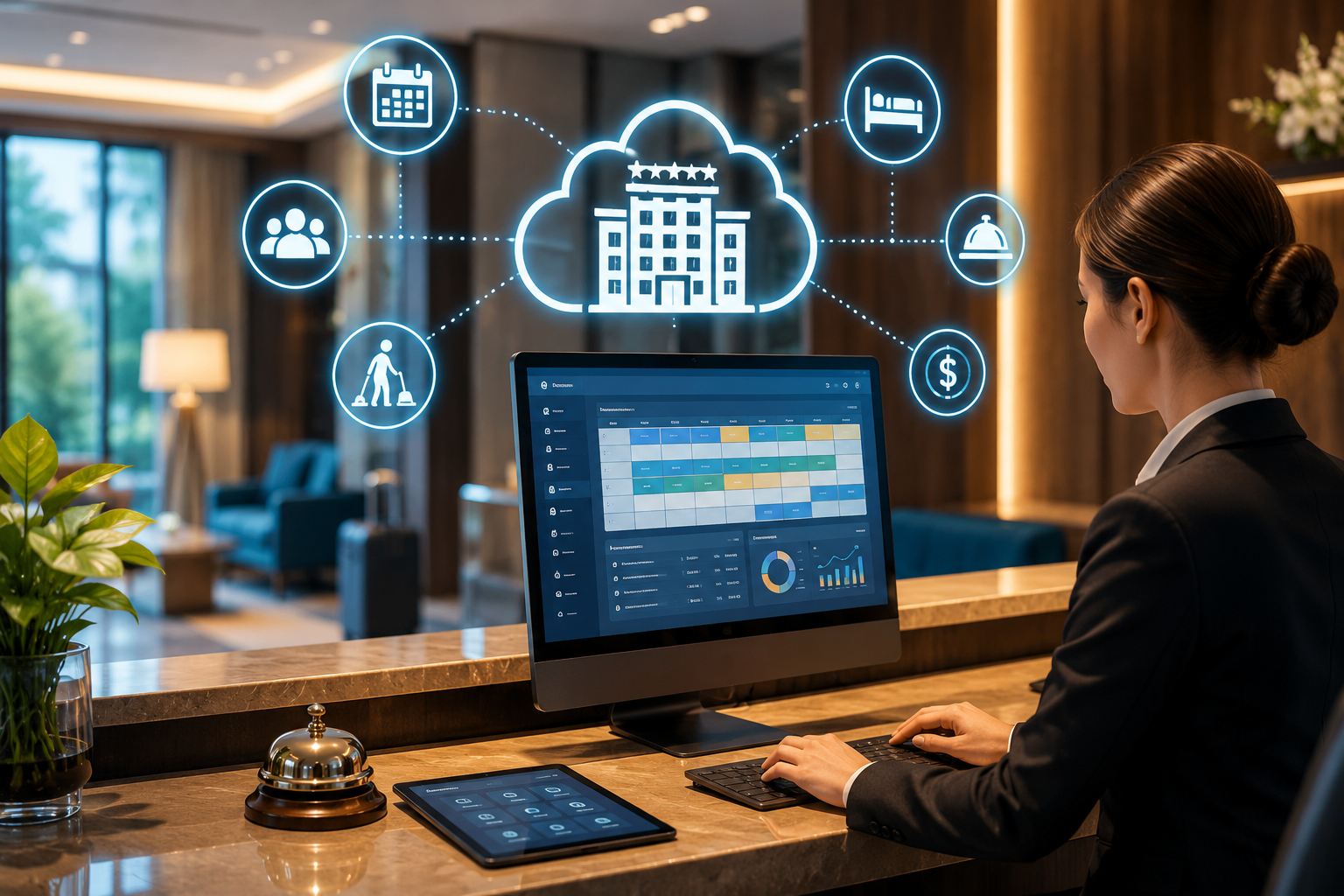
This is the prerequisite and most important step. A hotel management software (Property Management System - PMS) specifically designed for the chain model will help you connect all properties to a centralized management system. Business owners can easily:
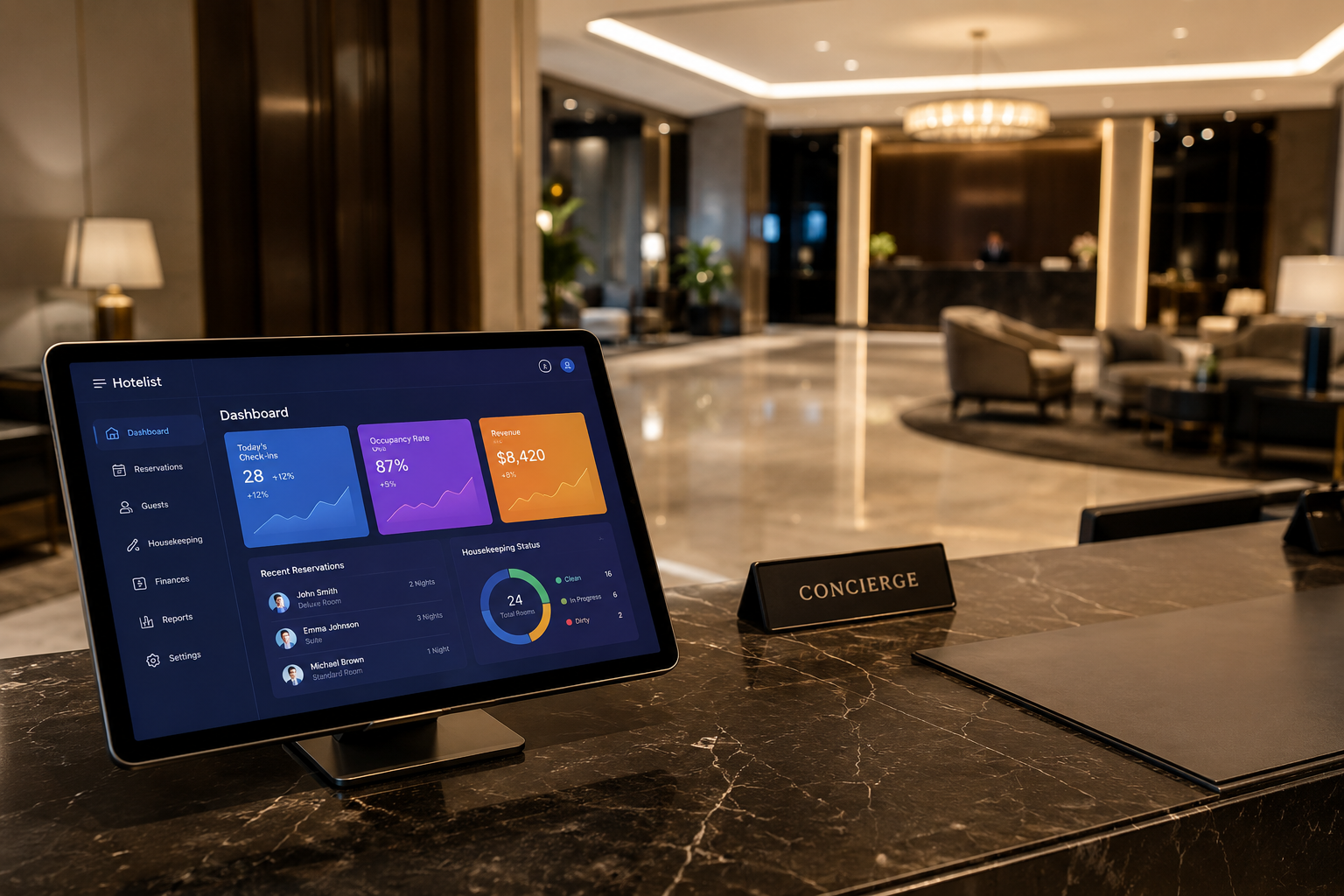
- Track occupancy, revenue, and expenses of each property or the entire chain in real-time.
- Centralized customer information management, helping to identify loyal customers regardless of which branch in the system they stay at.
- Integrating hardware devices such as magnetic locks and smart electricity systems to minimize the risk of staff arbitrarily renting rooms to guests outside the system.
2. Standardizing Standard Operating Procedures (SOP)
SOP (Standard Operating Procedure) is a set of standard operating procedures for every department in the hotel, from reception, housekeeping, kitchen to security. When managing a hotel chain, applying synchronized SOPs helps to:
- Ensure all customers receive consistent service quality at any establishment.
- Easily train new staff based on existing standardized documentation.
- Establish key performance indicators (KPIs) for employees in a transparent and fair manner.
3. Using a centralized channel management system (Channel Manager)
Instead of having to log into each OTA account of each establishment to update room availability and rates, the Channel Manager system will automate this entire process. When a guest books a room at establishment A on Agoda, the system will immediately close that room on all other channels such as Booking.com and Expedia of that establishment, completely eliminating the risk of overbooking.
4. Building a clear organizational structure and delegation of authority
A good manager is not someone who does everything, but someone who knows how to delegate tasks. Recruit competent branch managers (Hotel Managers) and clearly delegate authority to them on the management software. You only need to monitor macro report metrics and approve key decisions, leaving detailed operational tasks to be proactively handled by your subordinates.
Comparison between traditional and modern management methods
To clearly see the difference and effectiveness of applying technology to hotel chain management, please refer to the comparison table below:
| Comparison criteria | Traditional management (Logbooks/Excel) | Modern management (Cloud PMS software) |
|---|---|---|
| Data update speed | Slow, having to wait for end-of-day or end-of-week reports. | Real-time, updated anytime, anywhere via phone/laptop. |
| Loss control capability | Low, prone to invoice fraud and undeclared room occupancy. | High, thanks to detailed permission settings and operation history tracking. |
| Booking management (Booking) | Prone to confusion and double-booking when selling on multiple channels. | 100% automatic synchronization, completely avoiding overbooking errors. |
| Scalability | Very difficult, the workload multiplies when adding locations. | Easily integrate new branches into the shared system in just a few clicks. |
Frequently Asked Questions (FAQ) about hotel chain management
Should I choose on-premise or cloud-based hotel chain management software?
You should prioritize choosing cloud-based software (Cloud-based PMS). This technology allows you to access management data anytime, anywhere with just an Internet connection, making it extremely suitable for managing multiple locations remotely at the same time without the need to install bulky servers.
How to maintain a consistent corporate culture across branches?
Organize periodic training sessions, rotate staff between locations to increase cohesion, and build a clear corporate culture handbook. Good internal communication will help employees at all branches understand and work towards the common goals of the chain.
How much does it cost to implement a hotel chain management system?
Costs depend on the scale (number of rooms, number of branches) and the features you require. Currently, software providers often apply a very flexible monthly subscription fee model (SaaS), ranging from a few hundred thousand to several million VND per month for a single establishment. This is a highly optimized cost compared to the benefits of preventing financial loss that it brings.
Conclusion
In summary, hotel chain management or managing multiple lodging establishments at the same time requires a harmonious combination of standardized operating procedures and modern management technology. Transitioning from manual management methods to using specialized PMS software not only saves you time and effort but is also a solid launching pad to expand your business scale without limits. Wishing you success on the path of developing your lodging chain!