


In today's hospitality industry, competition is becoming increasingly fierce. Not only large hotels and 5-star resorts need technology, but even homestays, motels, or small and medium-sized hotels are facing the challenge of optimizing operations. Many business owners often wonder: Do small hotels need management software? Is this a wasteful investment? This article will help you answer the above question in detail and find the most optimal small hotel software solution.
Current management status at small-scale hotels today
Most small hotels (under 30 rooms) in Vietnam still maintain traditional management methods. Recording booking information, customer information, and revenue is often done manually through logbooks or custom Excel files. This method may seem cost-effective initially, but it poses many potential risks:
- Revenue loss: Failing to strictly control guest check-in/check-out times, or staff renting out rooms without reporting them, is a very common occurrence.
- Double booking (Overbooking): When selling rooms on multiple OTA channels (such as Agoda, Booking, Expedia) at the same time, manual updates can easily lead to two guests booking the same room at the same time.
- Time-consuming and unprofessional: Customers have to wait a long time during check-in/check-out because staff have to manually search through logbooks or Excel files.
- Unable to manage remotely: Hotel owners must always be present at the reception desk because there are no tools to monitor business operations when they are away.
Do small hotels need management software?
The answer is definitely YES. Whether your hotel has only 5 rooms, 10 rooms, or 20 rooms, applying technology is the key to survival and growth. A small hotel software system is not just a tool for recording bookings, but it is also an effective assistant that helps you standardize the entire operational process, thereby enhancing competitiveness against other competitors in the market.
Outstanding benefits of using small hotel software
Investing a small cost in specialized software will bring great and long-term value to your hotel:
1. Optimizing operational processes and saving time
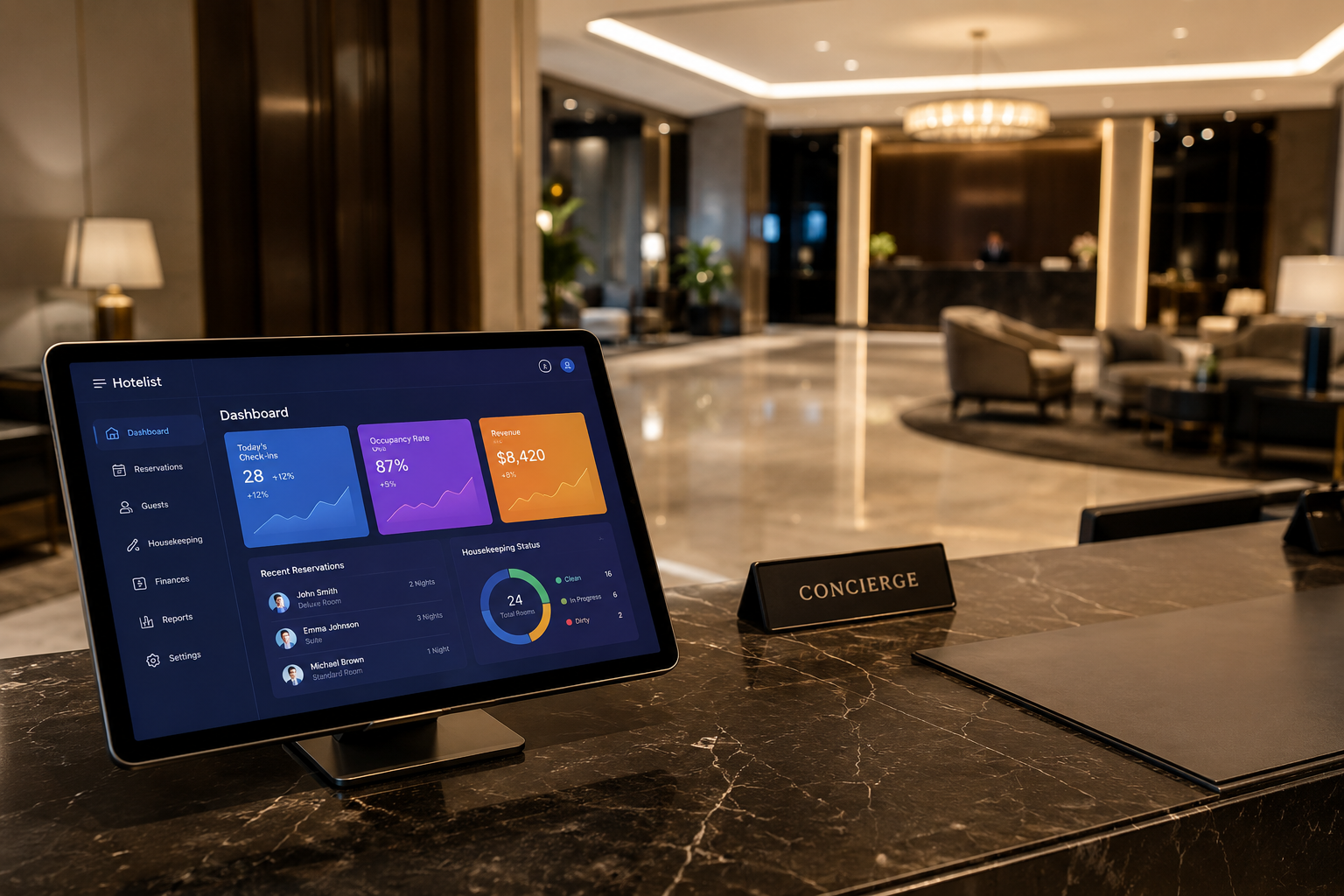
All operations from check-in, check-out, room billing, and accompanying services are performed automatically with just a few clicks. Receptionists no longer have to calculate manually, minimizing errors and shortening customer waiting times.
2. Minimizing overbooking
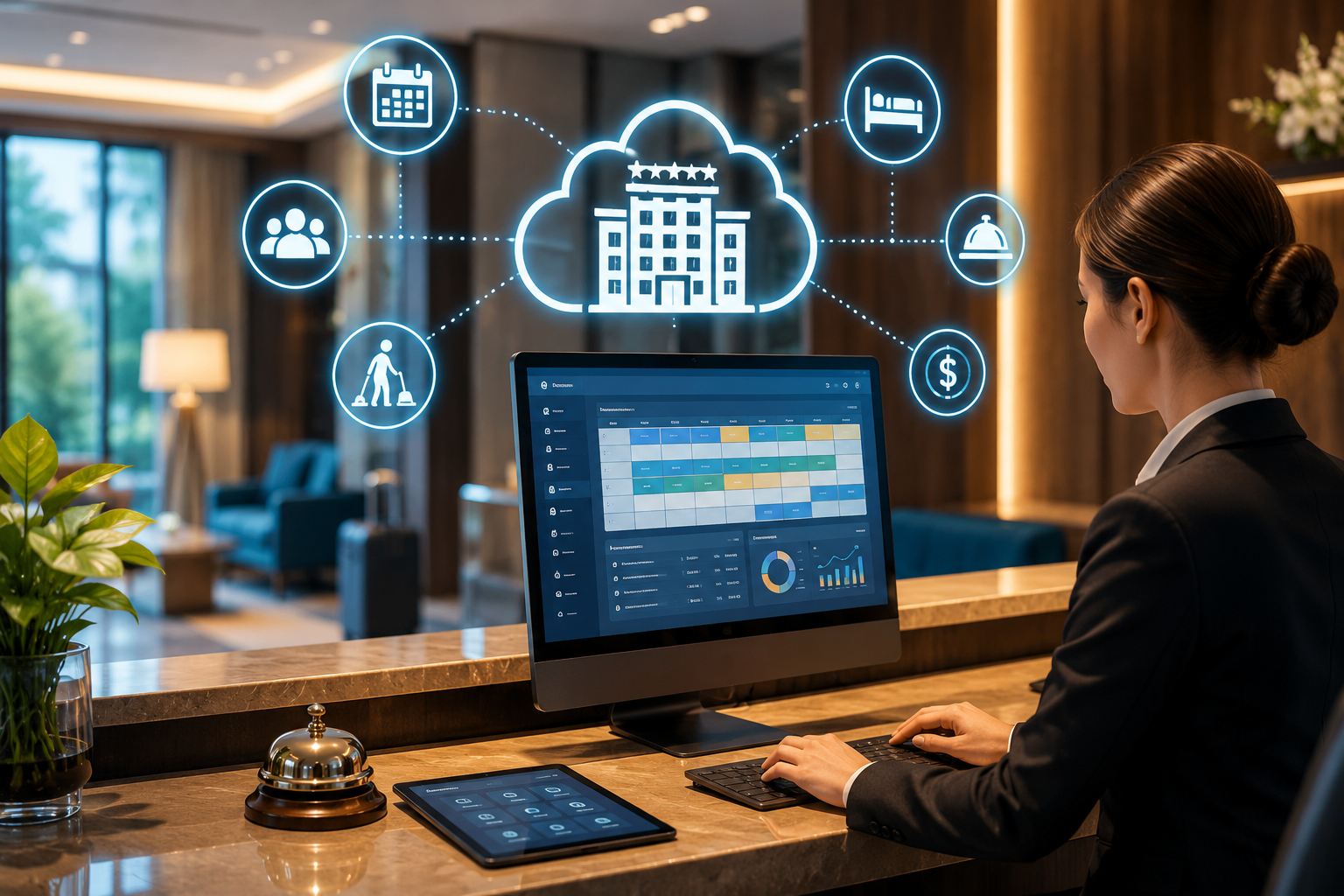
Modern small hotel software often integrates a channel manager feature (Channel Manager). When a guest books a room on Booking.com, the system will automatically close that room on Agoda, Expedia, and the hotel's website immediately, completely eliminating the risk of double bookings.
3. Tight revenue management, preventing losses
The software automatically records all transactions. Hotel owners can easily check reports on revenue, expenses, customer and partner liabilities by day, week, and month. All staff activities are tracked in a history log, minimizing fraud.
4. Remote management anytime, anywhere
With cloud computing technology, you only need a smartphone or laptop with an internet connection to monitor all hotel activities: the number of vacant rooms, daily revenue, and the list of check-in/check-out guests without needing to be physically present.
Comparison between traditional management methods and using software
To get a more objective view, let's compare the two management methods through the table below:
| Comparison criteria | Logbook / Excel Management | Using Small Hotel Software |
|---|---|---|
| Processing speed | Slow, prone to errors when busy. | Fast, fully automated. |
| Accuracy | Human-dependent, prone to data errors. | Absolute accuracy thanks to automated calculation systems. |
| OTA Channel Sync | Manual, high risk of overbooking. | Automatic real-time two-way synchronization. |
| Remote management | Impossible or very difficult. | Easily managed via mobile app/laptop. |
| Data security | High risk of data loss if computer breaks down or logbook is lost. | Absolutely secure thanks to cloud storage. |
Criteria for choosing the right small hotel software
Not all software is suitable for small business models. When choosing, you need to keep the following criteria in mind:
- Simple, easy-to-use interface: Small hotel staff are usually not very tech-savvy. The software needs to have an intuitive interface that is easy to get used to after just 15-30 minutes of training.
- Reasonable cost: Priority should be given to software with flexible pricing plans based on the number of rooms to save initial costs.
- Quick technical support: Choose a provider with 24/7 customer service to promptly handle issues that arise during operation.
- Scalability: The software can easily upgrade features when your hotel expands its scale or adds new services.
Frequently Asked Questions (FAQ)
Should hotels with fewer than 10 rooms use software?
Yes. Even with a scale of fewer than 10 rooms, using small hotel software still helps you professionalize your service, manage revenue accurately, and save time to focus on taking better care of customers.
How much does it cost to use small hotel software?
Currently, there are many price segments on the market. For small hotels, the cost usually ranges from 100,000 VND to 500,000 VND/month depending on the number of rooms and accompanying features.
Is there a risk of data loss when using the software if the internet connection is lost?
Most modern hotel management software supports a temporary offline mode. When the internet connection is restored, data will automatically synchronize to the cloud system, ensuring no work interruption or data loss.
Conclusion
In conclusion, applying small hotel software to the management process is no longer a luxury option but has become a mandatory requirement to enhance business efficiency and competitiveness. Invest smartly today to free up labor and optimize profits for your hotel.