

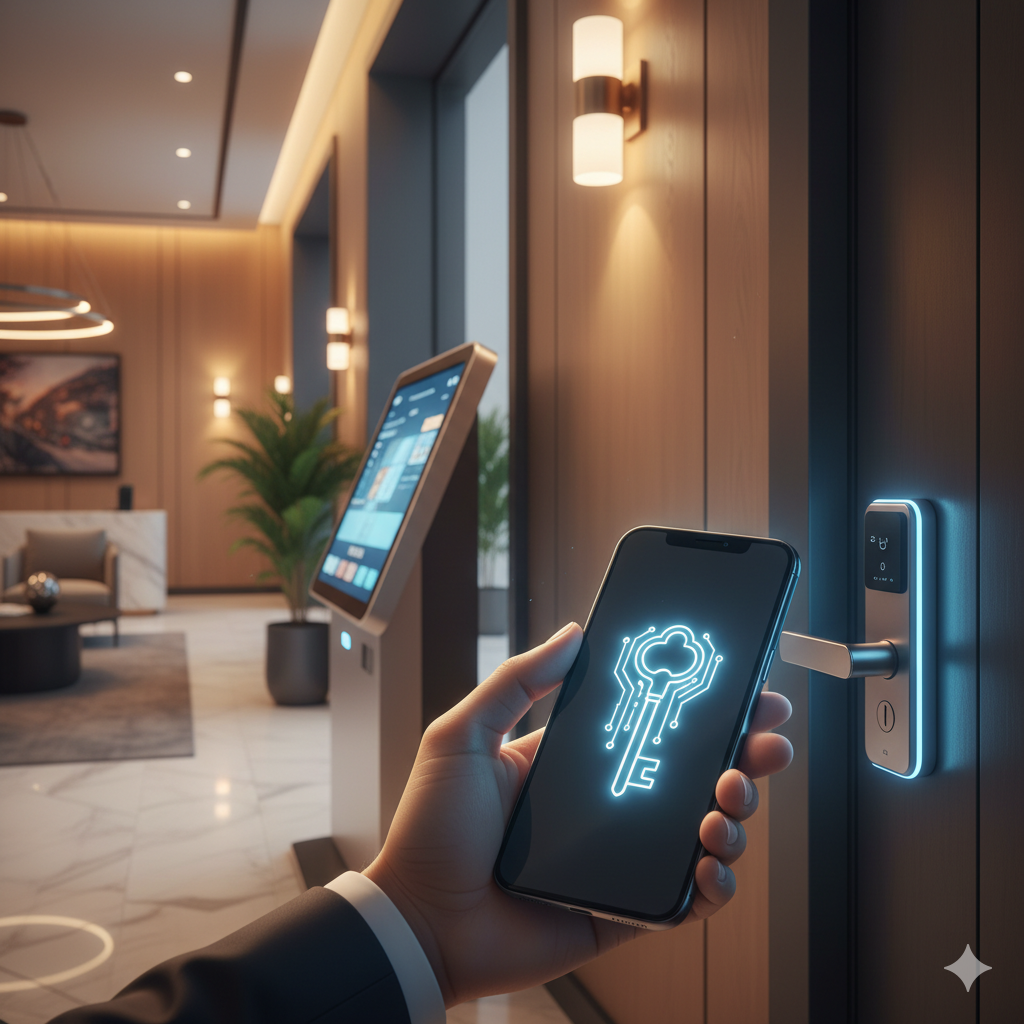
What is hotel operations automation?
In the digital era, the tourism and hospitality industry is witnessing powerful transformations to meet the increasing demands of customers. One of the core concepts reshaping this entire industry is hotel automation (hotel operations automation). So, what exactly is this solution, and why has it become an inevitable trend for all accommodation properties today?
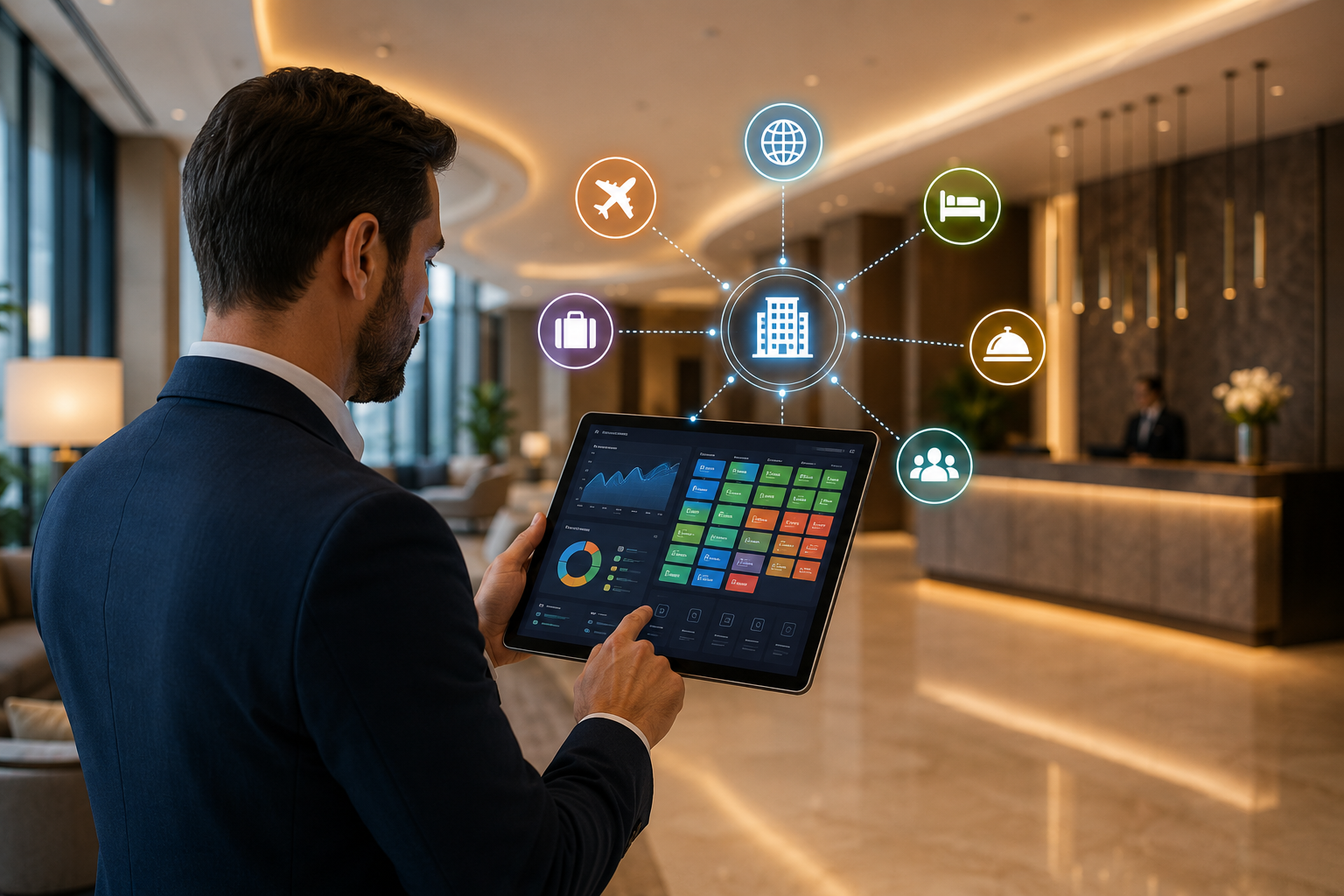
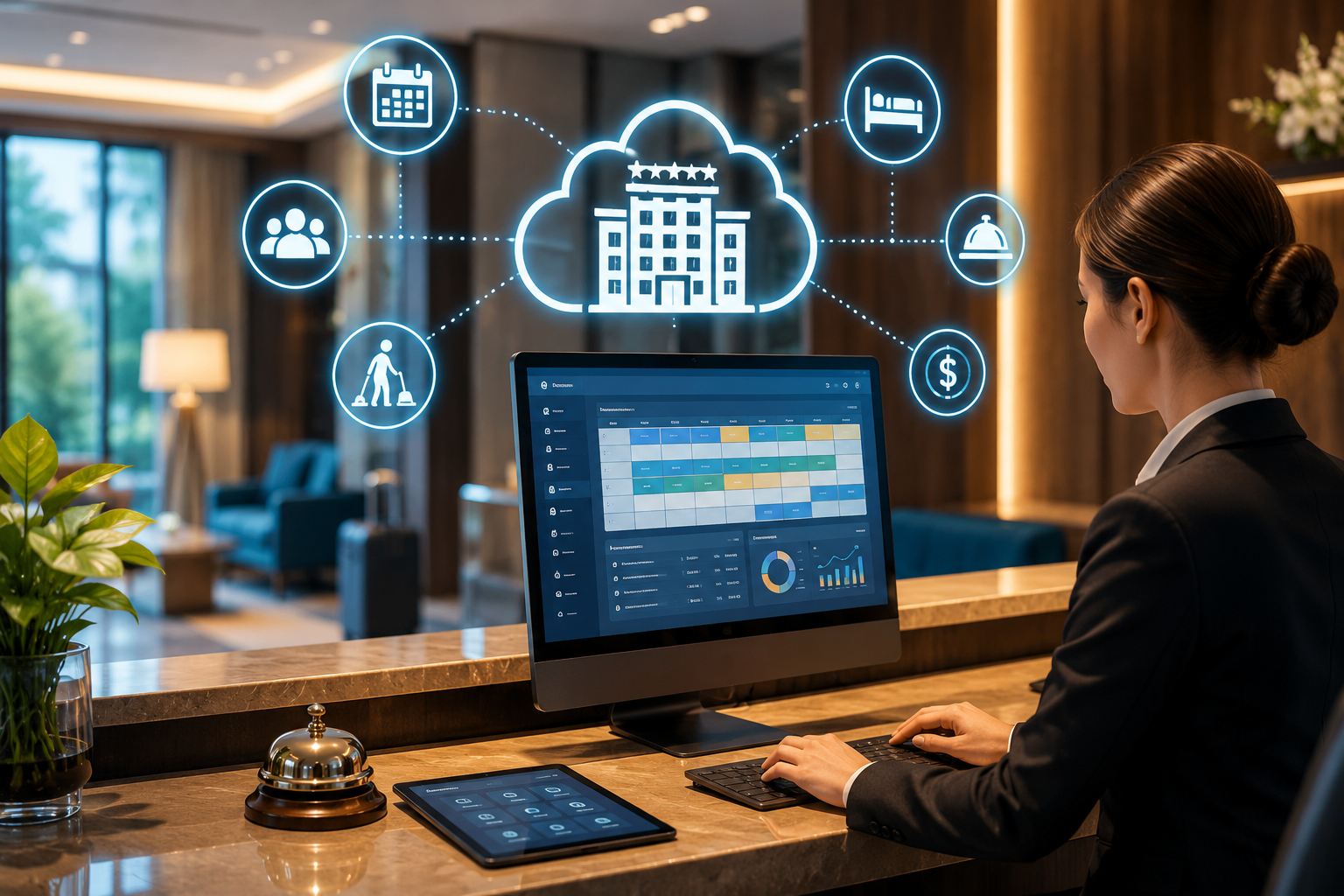
Hotel operations automation is the application of modern technologies, specialized management software, and smart devices (IoT) to automate repetitive workflows. Instead of relying entirely on manual human operations, tasks ranging from booking, check-in/check-out, sending customer care emails, and housekeeping management to updating room rates are all processed automatically, quickly, and accurately by the system.
Why should you implement hotel automation today?
Transitioning from a traditional operating model to applying hotel automation solutions brings outstanding benefits, helping businesses optimize resources and boost revenue:
1. Saving labor costs and operational time
Many time-consuming procedural tasks such as entering customer information, reconciling invoices, or updating room availability on OTA channels can now be fully automated. This helps reduce the workload pressure on reception and housekeeping staff, thereby optimizing staffing levels and saving significant operating costs for investors.
2. Minimize errors and revenue loss
Human errors are inevitable in manual operations, such as overbooking, entering incorrect room rates during peak hours, or forgetting to record guest payments. With a hotel automation system, all data is synchronized in real-time across departments, minimizing the error rate to nearly zero.
3. Enhance customer experience and satisfaction
Today's customers demand speed, convenience, and privacy. Automation processes help shorten waiting times during check-in and check-out. Automated messaging systems before, during, and after their stay ensure guests always feel the thoughtful and professional care from the hotel.
4. Optimize revenue and room occupancy
Modern automation software integrates dynamic pricing features. The system automatically analyzes market demand, competitors, and current occupancy rates to adjust room rates optimally in real time, helping hotels maximize revenue per available room (RevPAR).
The most popular hotel automation solutions today
To build a comprehensive automated operating system, hotels typically integrate the following core technology solutions:
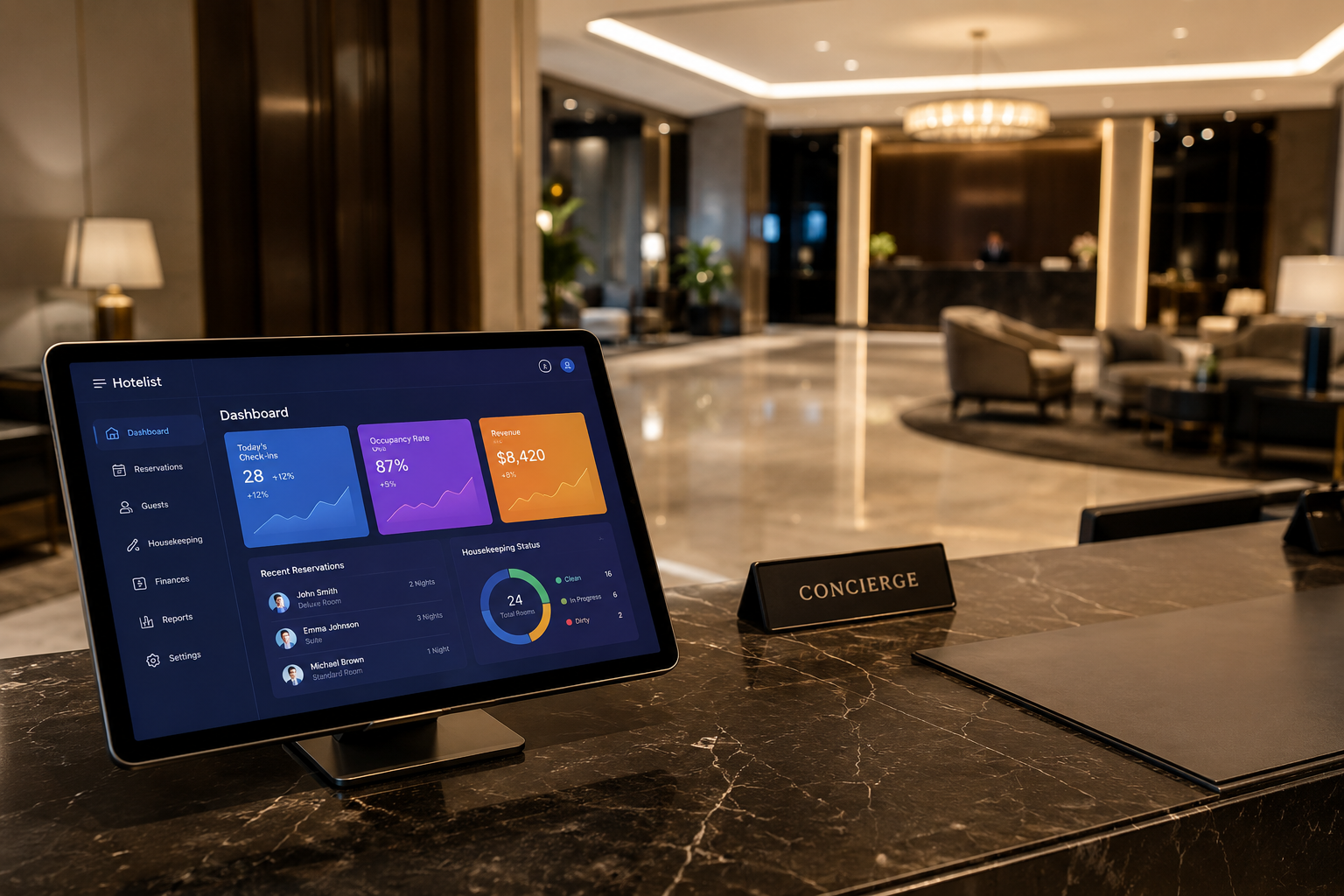
- Property Management System (PMS): The heart of all operations, automating everything from booking and room assignment to invoice management and financial reporting.
- Channel Manager: Automatically synchronizes room availability and rates across all OTA channels (Agoda, Booking, Expedia...) simultaneously, completely eliminating the risk of overbooking.
- Self-check-in/check-out kiosk: Allows guests to scan their passport/ID, make payments, and receive room keys in just a few minutes without going through the front desk.
- Smart Room System (Smart Room - IoT): Automatically turns on/off electrical and air conditioning systems when guests check in or out, maximizing energy savings and protecting the environment.
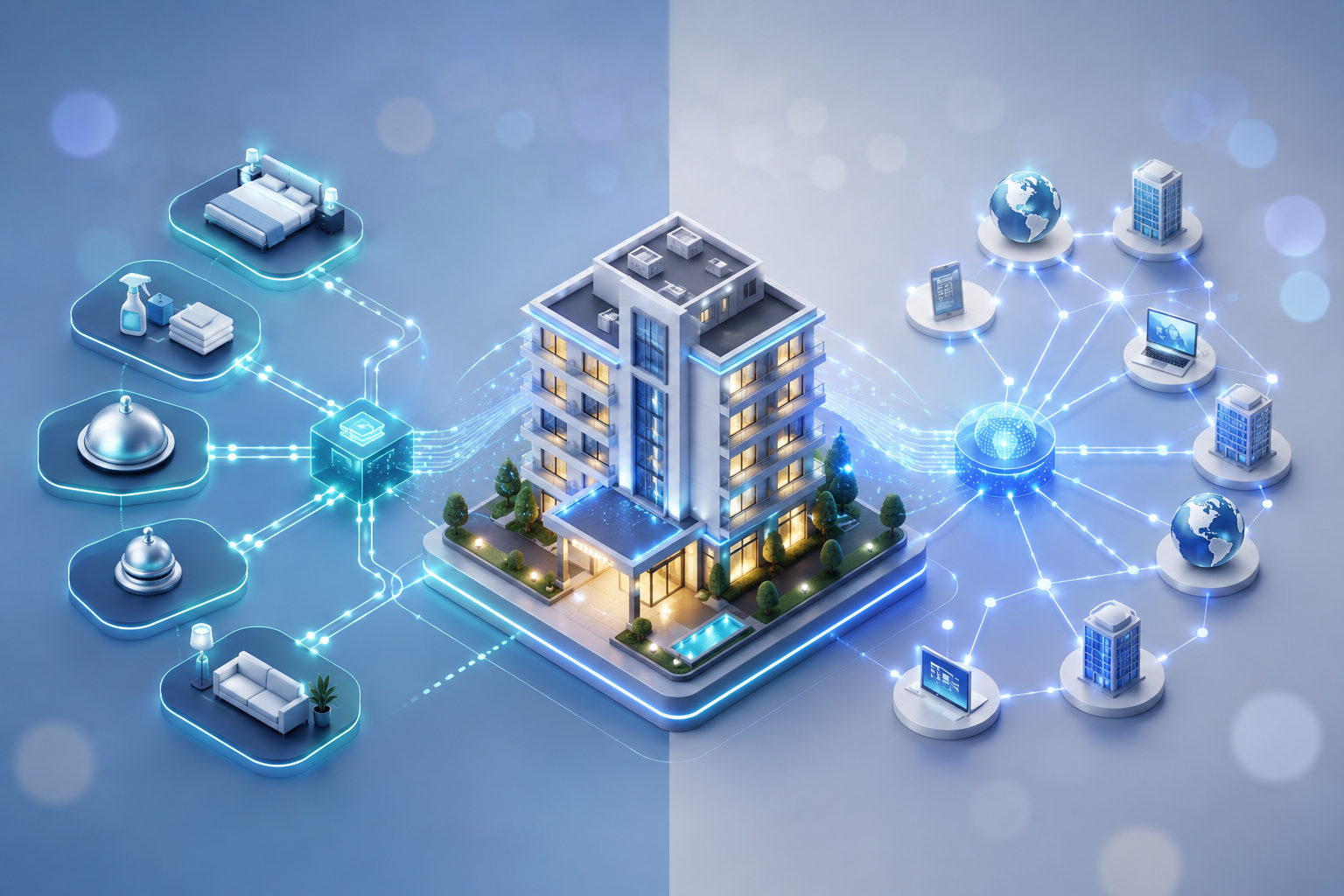
Below is a visual comparison between traditional operations and automated operations:
| Comparison criteria | Traditional operations | Automated operations (Automation) |
|---|---|---|
| Check-in/out time | 10 - 15 minutes (waiting in line, manual data entry) | Under 2 minutes (via Kiosk or mobile app) |
| Room availability synchronization | Manual updates, prone to delays and causing overbooking | Real-time synchronization across all OTA channels instantly |
| Customer care | Manual email/message sending, easy to miss customers | System automatically sends based on personalized scenarios |
| Energy management | Depends on guest awareness and staff room checks | Automatically cuts power when the room is vacant thanks to IoT sensors |
4-step process for effective hotel automation implementation
To successfully apply technology without disrupting operations, business owners should follow the following structured process:
Step 1: Assess actual needs: Identify the biggest bottleneck in current operations (e.g., revenue loss, guest complaints about check-in speed, or excessively high labor costs) to prioritize solving first.
Step 2: Choose the right solution: Look for reputable PMS and Channel Manager software providers that offer flexible integration capabilities, user-friendly interfaces, and 24/7 technical support.
Step 3: Structured staff training: Technology only reaches its maximum effectiveness when people master it. Organize thorough hands-on training sessions for all staff across departments.
Step 4: Continuous measurement and optimization: Closely monitor metrics such as guest request processing time, occupancy rate, and customer feedback to adjust automation scenarios for the best fit.
Frequently Asked Questions (FAQ) about hotel automation
Is hotel automation suitable for homestays or small hotels?
Absolutely. In fact, small hotels and homestays are often limited in terms of staffing. Applying hotel automation helps property owners manage remotely more easily, automating the check-in process without needing to hire too many 24/7 front desk staff.
Does automation take away the warmth and hospitality in service?
No. On the contrary, when time-consuming administrative tasks are handled by machines, your staff will have more time to converse, listen, and attentively care for customers, delivering a more deeply personalized experience for guests.
What is the initial investment cost for an automation system?
The cost depends on the scale and level of integration of the hotel. Currently, there are many SaaS (software as a service) solutions with monthly fees at extremely reasonable prices, making it easy for small and medium-sized hotels to access technology without making a huge initial investment.
Conclusion
Applying hotel automation is no longer a luxury option but has become a vital factor helping hospitality businesses survive and thrive in the digital era. Investing in automation technology today is a strategic move that helps you optimize costs, enhance competitiveness, and deliver the best experience to customers.